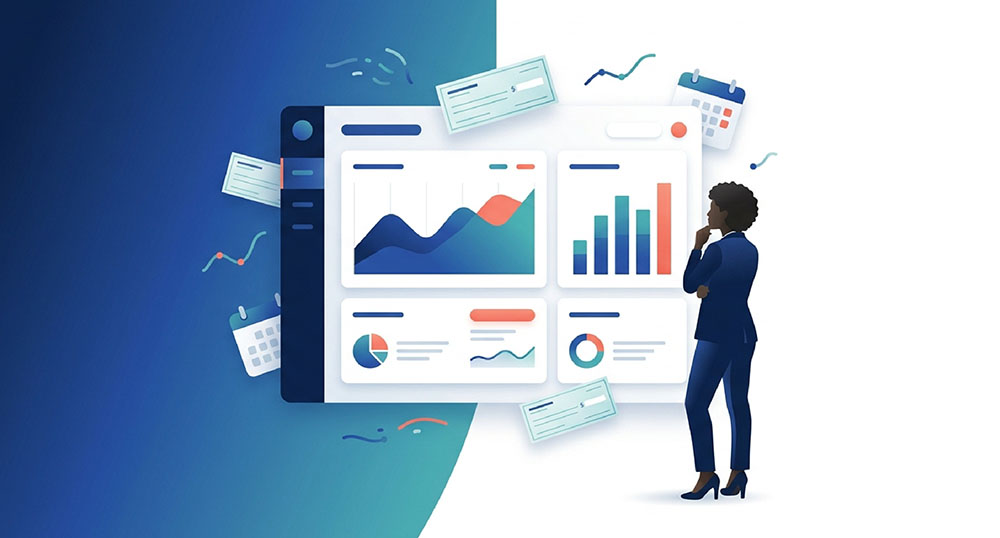
Workday Adaptive Planning helps finance, HR, and operations teams turn planning from a reactive exercise into a strategic advantage. When business conditions change quickly, teams need a planning process that can adapt just as fast.
That’s where Workday Adaptive Planning stands out: it gives organizations a flexible way to model scenarios, forecast performance, and make better decisions with confidence.
Why It Matters: Cross-functional planning and real-time reporting creates better visibility into revenue expectations, improves accountability for teams, highlights key dependencies and risks, and supports stronger decision-making across the organization.
This means departments and budgets are better aligned to achieve goals and better positioned to anticipate and respond to challenges.
Three Use Cases for Workday Adaptive Planning
Below are three use cases that show how Workday Adaptive Planning adds value across the business. Plus, we’ll tie these use cases together in a business example.
1. Forecasting for headwinds or tailwinds scenarios
Every business faces periods of uncertainty. Sometimes the market improves and creates tailwinds such as stronger demand, better profit margins from reduced materials cost, or technological advancement. Other times, headwinds appear in the form of rising supply costs, slower sales due to low consumer confidence, or increased competitive pressure.
Workday Adaptive Planning makes it easier to build and compare scenarios so leaders can understand the potential impact before making decisions. Instead of relying on static budgets or manual spreadsheet updates, finance teams can quickly test assumptions and see how changes affect revenue, margin, and overall performance.
The result is a more agile planning process. Leaders can respond faster, prioritize the right investments, and prepare the organization for both upside and downside outcomes.
2. Workforce planning for same store vs. de novo growth
Growth doesn’t always look the same across a business. In retail, hospitality, and similar industries, one location strategy may focus on same store growth while another depends on de novo expansion. Each path affects hiring needs, labor costs, and staffing plans in different ways.
Workday Adaptive Planning helps organizations align workforce planning with the realities of each growth model – or one that relies on a mix of expanding your footprint and improving performance at existing locations. Teams can model headcount, compensation, and hiring timelines based on operational assumptions rather than using a one-size-fits-all approach.
That means leaders can plan labor more accurately, connect staffing decisions to store growth strategy, and better understand the cost of expansion before committing resources.
3. Sales forecasting based on low, mid, and high close rates
Sales teams work with a pipeline that changes every day. Close rates can vary depending on deal size, stage, seasonality, market conditions, and the capabilities of individual sales reps. That makes it difficult to rely on a single forecast.
With Workday Adaptive Planning, organizations can build sales forecasts around low, mid, and high close rate scenarios. This gives finance and sales leaders a clearer view of what revenue could look like under different outcomes.
Planning around factors like the percentage of sales reps that hit ideal close rates, turnover in sales positions, or close rates by service line delivers a more detailed view on potential revenue and how to impact it. For example, teams can strategize on how to set lead volume targets, manage sales bonus structures, or develop performance-based training.
Factoring in multiple use cases with Workday Adaptive Planning
Let’s bring these use cases together in an example because the reality is that businesses need to account for multiple factors that impact performance.
Consider a retail healthcare chain with locations in several states that offers multiple types of elective and non-elective procedures. They want to increase same-store revenue but also plan to expand their footprint through a combination of de novo locations and practice acquisitions.
They would need to consider budgeting factors such as:
- Regional salary and hourly pay ranges for clinical and non-clinical staff
- Hiring staff for de novo locations based on target opening dates
- Marketing costs and profit margins for different service lines
- The cost of key medical supplies and equipment
They would also need to evaluate performance factors such as:
- Turnover and close rates of sales staff for elective procedures
- Potential loss of market share if a competitor opens competing locations
- Ramp up timeline for a de novo location vs. the performance of a mature location
- Capacity and demand for different treatment types
Does that sound like the kind of planning that’s easy to manage across multiple platforms and spreadsheets with different functional owners?
Workday Adaptive Planning allows you to coordinate that process and monitor performance to plan in a single unified platform.
Plan budgets and workforce with confidence
Whether you’re modeling market shifts, planning for workforce growth, or forecasting revenue from product or service lines, Workday Adaptive Planning helps bring clarity to complex planning challenges.
It gives teams the flexibility to forecast more accurately, adapt faster, and make decisions based on real business scenarios. Most importantly, it gives you the best chance to meet or exceed revenue and growth goals.
If you’re ready to learn more, contact Three Link Solutions for help implementing or optimizing Workday Adaptive Planning.